Keeping the Coast of Cemagi Clean
 August 17, 2026
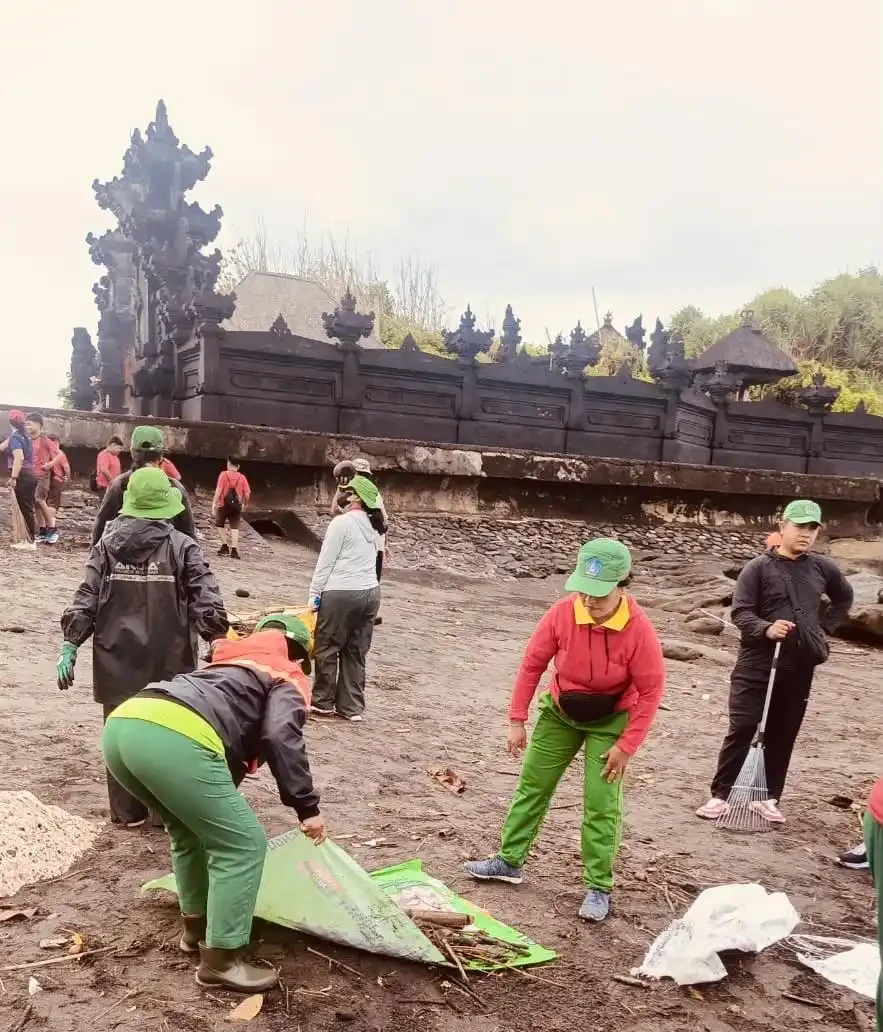
Keeping the Coast of Cemagi Clean
How a Balinese Village Takes Care of Its Environment
Visitors to Cemagi often notice something.
The beaches feel quieter. The rice fields are still part of everyday life. The roads through the village feel different from Bali's busiest tourism areas.
And importantly, there is a visible effort to keep it that way.
Keeping a coastal village clean is not simply a matter of sending someone to sweep the beach every morning. In Cemagi, waste management increasingly involves the Desa, local banjars, residents, businesses, schools, community organisations and government cleaning teams.
It is a community effort — and one that says something important about the future of the Coast of Cemagi.
The Challenge of Keeping a Bali Beach Clean
Anyone who lives near Bali's coast knows that not everything that washes onto a beach was left there.
Ocean currents, high waves and seasonal weather can carry large amounts of material onto Bali's western coastline.
At Cemagi Beach, government cleaning teams have had to deal with sampah kiriman — waste and natural debris brought in by the sea.
During clean-ups, teams collect what has washed ashore and remove it for further handling.
But Cemagi's approach increasingly starts before waste reaches the beach.
Start at the Source
One of the important principles promoted by the Pemerintah Desa Cemagi is Pengelolaan Sampah Berbasis Sumber — waste management at source.
The principle is simple:
Don't wait until everything becomes one pile of rubbish. Separate it where it originates.
Households and businesses are encouraged to separate organic waste, recyclable or reusable inorganic materials, and residual waste.
The village has supported this approach through education, monitoring and community activities.
And tourism businesses are part of it too.
The Desa has specifically involved the local HOREKA sector — hotels, restaurants, cafés and other tourism businesses — in improving the separation and management of waste at source.
That becomes increasingly important as Cemagi develops.
Tourism creates jobs and opportunities for the village, but more visitors also mean more consumption and more waste.
Keeping Cemagi beautiful therefore isn't only the responsibility of the people who live here.
Visitors and tourism businesses have a role too.
Cemagi's Local Waste Facility: TPS 3R
Cemagi has its own community waste-management facility:
TPS 3R Sarwa Metu Wangi.
The three Rs stand for:
Reduce. Reuse. Recycle.
Rather than treating all waste as something that simply needs to disappear, the system is designed around separating and processing different waste streams.
It is an important piece of infrastructure for a growing village.
But infrastructure alone doesn't keep Cemagi clean.
People do.
When Waste Still Has Value
Another part of the local system is the Bank Sampah, or Waste Bank.
Residents can bring materials that have already been separated at home. Plastic, bottles, cardboard and other reusable inorganic materials can be collected separately because they may still have economic value.
It changes the way we look at rubbish.
Something that would otherwise become mixed waste can instead become a material with value.
Perhaps even more importantly, it encourages families to think about waste before they throw it away.
Reduce what you use.
Separate what remains.
Reuse or recycle what you can.
And minimise what finally becomes residual waste.
Gotong Royong: Taking Care of the Coast Together
Then there is gotong royong.
It is one of those Indonesian concepts that is difficult to translate perfectly into English. “Working together” comes close, but doesn't fully capture it.
Gotong royong is the idea that members of a community collectively contribute to something that benefits everyone.
In Cemagi, that can mean cleaning the coast together.
Village officials, traditional village organisations, residents, schools, businesses and other community groups have participated in organised clean-ups along the coastline.
These are not simply cleaning operations.
They are also community events.
People work alongside each other, talk, laugh and take responsibility for a place they share.
The beach isn't somebody else's responsibility.
It belongs to the community.
Join a Beach Clean-Up in Cemagi
And you don't have to live in Cemagi to help take care of it.
From time to time, organised beach clean-ups bring together local residents, community organisations, businesses and volunteers to help clean the coastline.
Visitors can get involved when a suitable organised clean-up is taking place during their stay.
It is a simple way to give something back to the place you're visiting.
But there is another reason we think it is worth doing.
You meet people who care.
People who live here.
People who run businesses here.
People who care about the ocean, the village and the future of this part of Bali.
Instead of only experiencing Cemagi as a visitor, for an hour or two you can become part of the community taking care of it.
Guests staying at The Bali Manor Collection can ask our team whether an organised beach clean-up is planned during their stay. When possible, we'll be happy to help you connect and join.
Gloves on. Feet in the sand. Meet some good people.
And leave the beach a little cleaner than you found it.
More Than Cleaning Up
Perhaps the most important development is that Cemagi is trying to move beyond simply collecting rubbish after it has already become a problem.
Education increasingly plays a role.
Residents are encouraged to separate organic and inorganic waste. Local Waste Banks help keep valuable materials out of the residual waste stream. Businesses are encouraged to take responsibility for what they produce.
And beach clean-ups make the issue visible.
Cemagi has also participated in initiatives focused on the cleanliness of tourism villages, where waste separation and the handling of different waste streams are part of what is assessed.
That sends an important message for a village that is attracting more visitors:
A beautiful destination needs to be looked after, not just marketed.
The Ocean Will Always Bring Something Back
No waste-management system can guarantee a perfectly clean coastline every day.
Especially during certain seasons, Bali's currents and weather can bring waste, driftwood and other material back onto the shore.
That is a reality along many parts of the island.
What matters is what happens next.
At Cemagi, government cleaning teams, village organisations and members of the community repeatedly return to the coastline to clear what has washed ashore.
The objective isn't perfection.
It is responsibility.
Tourism Has a Role Too
As visitors — and as a hospitality business operating in Cemagi — we also have a responsibility.
The future of Cemagi should not be about stopping tourism.
It should be about developing tourism without losing the things that make people want to come here in the first place.
The rice fields.
The village life.
The temples.
The coastline.
And the feeling that there is still space.
For visitors, small choices matter: avoiding unnecessary single-use plastics, disposing of waste properly, respecting the beach and supporting businesses that take their environmental responsibilities seriously.
For tourism businesses, that responsibility is bigger.
We generate waste. We use water and energy. We employ people and bring visitors into the community.
So we should also contribute to protecting the place from which our businesses benefit.
Keeping the Coast of Cemagi, Cemagi
Cemagi will change.
More people are discovering this part of Bali, and development is already taking place.
The question isn't whether change will happen.
It is what kind of change Cemagi chooses.
The work being done by the Desa, the banjars, waste-management teams, businesses and local community shows that protecting the environment is already part of that conversation.
And that is something worth recognising.
Because the Coast of Cemagi isn't special simply because it is quieter than Canggu.
It is special because it is still a living community.
And keeping it clean is part of keeping it that way.
Frequently Asked Questions
Is Cemagi Beach clean?
Cemagi's beaches are actively looked after by the local community, village organisations and government cleaning teams.
Like many beaches on Bali's west coast, ocean currents and seasonal weather can sometimes bring waste, driftwood and other material onto the shore. Regular clean-ups help keep the coastline clean, but conditions can naturally vary from day to day.
How does Cemagi manage its waste?
Cemagi promotes waste management at source, meaning households and businesses are encouraged to separate waste before collection.
The village also has TPS 3R Sarwa Metu Wangi, which supports the principles of Reduce, Reuse and Recycle, as well as local Waste Bank initiatives for recyclable materials.
Does Cemagi organise beach clean-ups?
Yes. Organised beach clean-ups take place in Cemagi and have involved the Desa, banjars, schools, residents, local businesses, community organisations and other volunteers.
These activities form part of the wider effort to protect Cemagi's coastline and environment.
Can tourists join a beach clean-up in Cemagi?
When an organised beach clean-up is open to volunteers, visitors may be able to participate.
Guests of The Bali Manor Collection can ask our team if a suitable beach clean-up is planned during their stay. We believe it is a great opportunity not only to help the environment but also to meet local people and others who care about Bali's coastline.
What is a Bank Sampah?
Bank Sampah literally means “Waste Bank”.
It is an Indonesian community waste-management concept where selected recyclable materials are separated rather than being mixed with general waste.
Depending on the local system, materials such as plastic, bottles, paper and cardboard can retain economic value, helping turn waste into a resource.
What is TPS 3R?
TPS 3R is an Indonesian community-based waste processing system built around three principles:
Reduce, Reuse and Recycle.
Cemagi's facility, TPS 3R Sarwa Metu Wangi, forms part of the village's local waste-management infrastructure.
Why does rubbish sometimes wash up on Bali's beaches?
Not all rubbish found on a beach originates there.
During certain seasons, ocean currents, rivers, heavy rainfall and waves can transport waste and natural debris before depositing it elsewhere along Bali's coastline.
This is why a beach can be clean one day and receive new material from the ocean the next.
How can visitors help keep Cemagi clean?
The easiest way is to reduce unnecessary waste in the first place.
Avoid single-use plastics where possible, use refillable bottles, dispose of rubbish correctly and never leave anything behind on the beach.
Visitors can also support responsible local businesses and, when available, join an organised beach clean-up.
Small actions matter — especially when residents, businesses and visitors all participate.
Discover the Coast of Cemagi
The Coast of Cemagi is more than a place to stay.
It is a coastline of black-sand beaches, rice fields, temples, local communities, restaurants, surf and everyday Balinese life.
Continue exploring:
-
The Best Beaches on the Coast of Cemagi
-
Best Restaurants on the Coast of Cemagi
-
Surfing the Coast of Cemagi
-
Cemagi with Kids
-
Luxury Villas on the Coast of Cemagi
The Bali Manor Collection — Proud to call Cemagi home.

Escape to Luxury at The Bali Manor Collection
Whether you seek a peaceful retreat or a romantic getaway, our villas offer an unforgettable experience in the heart of Bali. Book your stay today and make your dream escape a reality.