Bali Pool Water: Safety for Villa Guests
 May 19, 2026
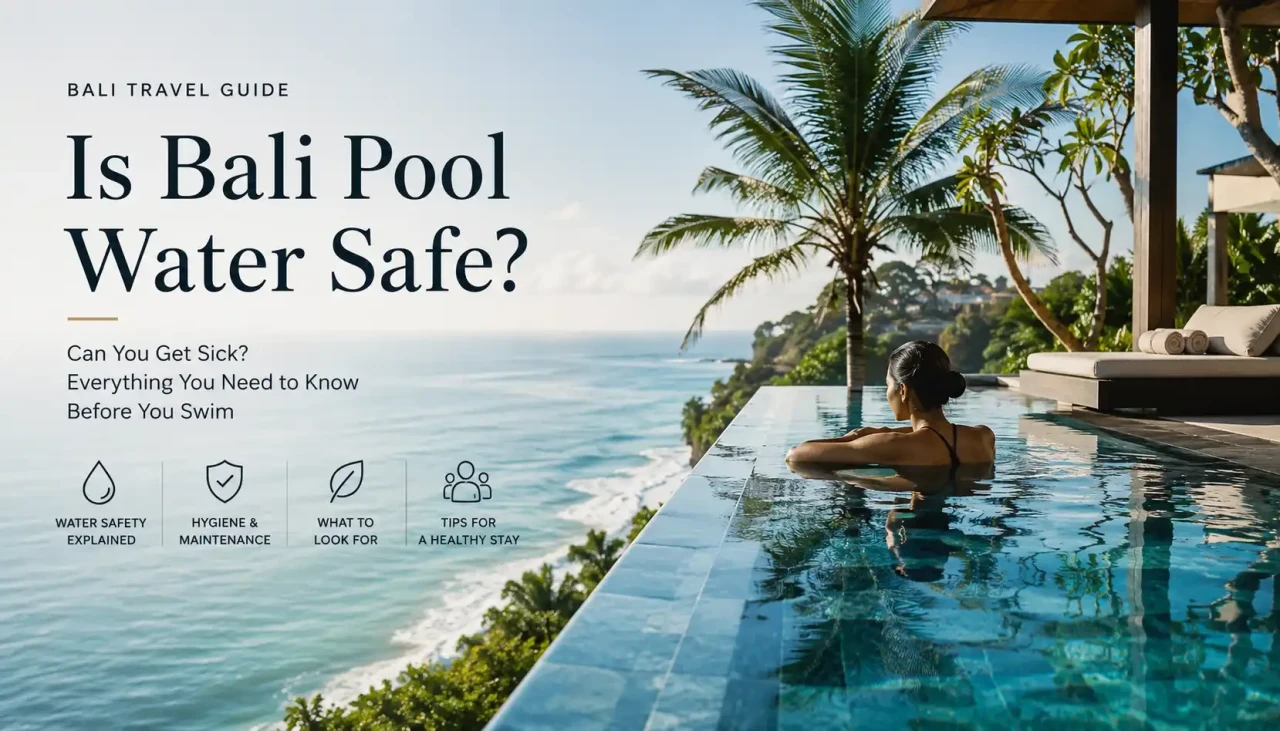
Can You Get Sick From Pool Water in Bali? Everything Luxury Travelers Need to Know
A private pool in Bali should feel calming — not concerning
There are few experiences more synonymous with relaxation than slipping into a private infinity pool in Bali.
The warmth of the tropical air. The soft sound of palm trees moving in the ocean breeze. Morning light reflecting across still water while the island slowly awakens around you.
For many travelers, a villa pool is not simply an amenity — it is the centerpiece of the entire experience.
Yet one question quietly concerns many visitors before arriving in Bali:
Can you get sick from pool water in Bali?
The honest answer is:
yes, it is possible — but almost always only in poorly maintained pools.
In professionally managed luxury villas, pool water is generally very safe. The difference lies entirely in:
- filtration,
- water balance,
- maintenance standards,
- and daily monitoring.
And in a tropical destination like Bali, those details matter more than most travelers realize.
Why Pool Water in Bali Requires Extra Attention
Bali’s tropical climate changes everything
Bali’s warm temperatures and humid climate create ideal conditions for relaxation — but also for bacteria, algae, and microorganisms to grow more rapidly than in cooler climates.
Pools in tropical destinations face constant exposure to:
- intense heat,
- high humidity,
- tropical rainfall,
- pollen,
- organic debris,
- and airborne particles.
Heavy rain can quickly alter water chemistry by introducing:
- dirt,
- leaves,
- dust,
- and contaminants into the pool.
This is why luxury villas in Bali require:
- more frequent filtration,
- continuous circulation,
- regular pH balancing,
- and consistent sanitation monitoring.
Proper pool maintenance in Bali is not occasional.
It is a daily responsibility.
Can You Really Get Sick From Swimming Pools in Bali?
Only if the pool is poorly maintained
Well-maintained swimming pools are generally safe.
Health issues usually occur when pools suffer from:
- inadequate filtration,
- poor chemical balance,
- stagnant water,
- or insufficient sanitation.
Potential symptoms from contaminated pool water may include:
- stomach problems,
- skin irritation,
- red eyes,
- ear infections,
- or mild bacterial infections.
The biggest risk factor is:
swallowing contaminated pool water.
This is especially important for children, who are naturally more likely to ingest water while swimming.
It is also important to separate:
- budget accommodations with inconsistent maintenance,
from - professionally managed luxury villas with strict water-quality standards.
In high-end villas, problems related to pool hygiene are relatively uncommon.
Can You Get Bali Belly From Pool Water?
Sometimes — but it is not the most common cause
Most cases of Bali Belly are linked to:
- contaminated food,
- unsafe drinking water,
- poor hand hygiene,
- or improperly handled meals.
However, poorly maintained swimming pools can occasionally contribute to stomach-related illness if contaminated water is swallowed.
This is why professional filtration and proper sanitation are especially important in tropical climates.
A clean-looking pool is not enough.
True water safety depends on:
- correct filtration,
- balanced pH levels,
- healthy circulation,
- and regular maintenance routines.
How to Tell if a Pool in Bali Is Clean
1. The water should look crystal clear
Clear water is one of the strongest indicators of proper maintenance.
You should easily be able to see:
- the pool floor,
- drains,
- and steps,
even in deeper areas.
Warning signs include:
- cloudy water,
- a milky appearance,
- foam,
- floating debris,
- or visible algae.
If the water does not immediately look fresh and transparent, avoid swimming.
2. A strong chlorine smell is not a good sign
Many travelers assume that a strong chlorine odor means a pool is clean.
In reality, the opposite is often true.
An overpowering chemical smell may indicate:
- poor water balance,
- excessive chloramine buildup,
- or inadequate filtration.
Well-maintained pool water should smell:
- soft,
- fresh,
- subtle,
- and almost neutral.
Modern luxury villas increasingly focus on maintaining water quality with minimal but effective chemical treatment rather than excessive chlorine use.
3. Check the waterline and pool edges
A properly maintained pool should feel clean in every detail.
Watch for:
- slippery surfaces,
- greasy residue,
- discoloration,
- algae buildup,
- or dirty grout lines.
These can indicate inconsistent cleaning or poor circulation.
4. Observe water movement and circulation
Healthy pool water should always be moving.
Look for signs that:
- filters are running,
- skimmers are active,
- and water is circulating evenly.
Still water creates better conditions for bacteria and algae growth.
5. Read guest reviews carefully
Reviews can reveal far more than professional photography.
Look specifically for phrases such as:
- “crystal clear pool,”
- “well maintained,”
- “clean water,”
- “fresh-smelling,”
- or “immaculately maintained.”
Consistent mentions of cleanliness are a strong trust signal.
When Should You Avoid Swimming?
Red flags travelers should never ignore
Avoid using a pool if you notice:
- cloudy or milky water,
- a strong chemical odor,
- visible algae,
- insects or larvae,
- slippery steps,
- stagnant water,
- dirty filters,
- or neglected surroundings.
In luxury hospitality, details matter.
A poorly maintained pool environment often reflects broader maintenance issues throughout the property.
Does Rain Affect Pool Water in Bali?
Absolutely — especially during rainy season
Tropical rain can rapidly affect pool chemistry.
After heavy rainfall:
- pH levels shift,
- mineral balance changes,
- and sanitization effectiveness can temporarily decrease.
Rain also introduces additional:
- pollen,
- organic material,
- dust,
- and debris into the water.
This is why professionally managed villas increase monitoring and maintenance after storms or heavy rain.
Saltwater Pools vs Chlorine Pools in Bali
Which feels better?
Many luxury villas now use saltwater systems because they typically feel:
- softer on the skin,
- gentler on the eyes,
- and less harsh overall.
However, saltwater pools still use sanitizing systems.
They are not completely chemical-free.
The difference is balance.
Modern luxury pool systems aim to create water that feels:
- clean,
- light,
- refreshing,
- and comfortable,
without the heavy chemical sensation many travelers associate with older pools.
How Luxury Villas Maintain Safe Pool Water
Daily maintenance makes all the difference
In high-end villas, pool care is usually part of a structured daily routine.
This often includes:
- pH testing,
- filtration checks,
- debris removal,
- circulation monitoring,
- and controlled sanitation adjustments.
Advanced villas may also incorporate:
- UV-supported systems,
- modern filtration technology,
- or low-chemical balancing systems.
The goal is never to eliminate treatment entirely.
It is to maintain water that is:
- hygienic,
- crystal clear,
- skin-friendly,
- and comfortable to swim in.
How The Bali Manor Collection Approaches Pool Water Quality
True luxury begins with peace of mind
At The Bali Manor Collection, we believe a swimming pool should feel effortless — calm, restorative, and deeply comfortable.
Our infinity pools are carefully maintained using professional filtration and balanced water-treatment systems designed to prioritize:
- clarity,
- comfort,
- hygiene,
- and a gentle swimming experience.
Through continuous monitoring and thoughtful maintenance, we aim to create pool water that feels:
- fresh,
- soft on the skin,
- crystal clear,
- and free from the overwhelming chemical smell often associated with heavily treated pools.
Surrounded by the tranquil coastline of Cemagi, ocean views, and Bali’s natural stillness, each swim becomes part of a slower, more restorative rhythm of living.
Simple Tips to Stay Healthy While Swimming in Bali
A few habits can make a big difference
Avoid swallowing pool water
Especially important for children.
Shower before swimming
This helps reduce oils, sunscreen residue, and bacteria entering the pool.
Rinse off after swimming
Helpful for sensitive skin and overall comfort.
Avoid swimming immediately after heavy rain
Particularly if the water appears less clear than usual.
Choose professionally managed villas
Consistent maintenance is the single most important factor in pool safety.
Safe Swimming in Bali Comes Down to Choosing Well
Swimming pools in Bali should not be a source of anxiety.
In professionally maintained luxury villas, they are designed to offer exactly the opposite:
- calm,
- comfort,
- wellness,
- and complete peace of mind.
The key is choosing accommodations that prioritize water quality with the same care and attention given to design, hospitality, and guest experience.
Because true luxury is never just about what you can see.
It is also about how effortlessly safe and comfortable you feel while you are there.
FAQ — Pool Water Safety in Bali
Can you get sick from pool water in Bali?
Yes, but usually only from poorly maintained pools with inadequate filtration or sanitation.
Can pool water cause Bali Belly?
In some cases, contaminated pool water may contribute to stomach illness if swallowed, although Bali Belly is more commonly linked to food or drinking water.
How can I tell if a pool in Bali is clean?
Look for crystal-clear water, clean edges, proper circulation, and a fresh neutral smell.
Why do some pools smell strongly like chlorine?
A strong odor often indicates poor water balance rather than better cleanliness.
Are saltwater pools safer?
Saltwater pools are often gentler on the skin and eyes, though they still require proper sanitation systems.
Is pool water safe for children in Bali?
Generally yes, when pools are professionally maintained and children avoid swallowing the water.
Does rain affect swimming pools in Bali?
Yes. Tropical rain can temporarily disrupt water chemistry and require additional maintenance.
Do luxury villas use fewer chemicals?
Many luxury villas now use advanced filtration and balanced systems to minimize excessive chemical use while maintaining safe water quality.

Escape to Luxury at The Bali Manor Collection
Whether you seek a peaceful retreat or a romantic getaway, our villas offer an unforgettable experience in the heart of Bali. Book your stay today and make your dream escape a reality.