Is the Sun Stronger in Bali? Everything Travelers Should Know About Bali’s UV Index, Tropical Heat & Luxury Island Living
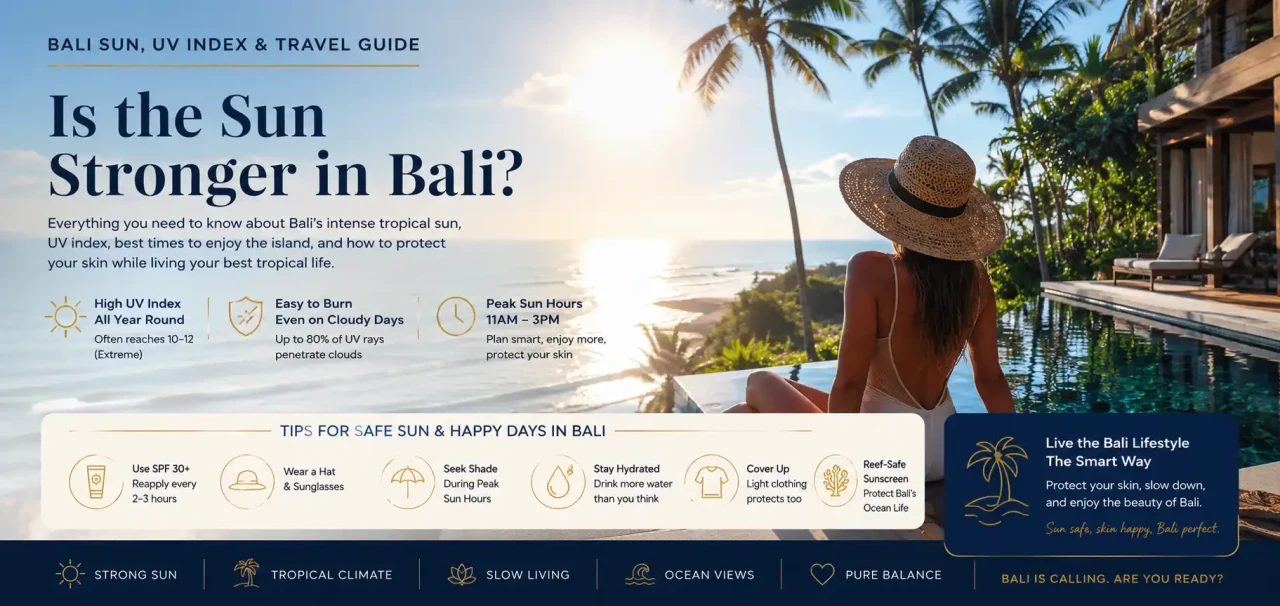
Yes — the sun in Bali is significantly stronger than in most parts of Europe and even Australia.
Thanks to the island’s location near the equator, Bali experiences an extreme UV index that often reaches levels of 10 to 12 throughout the year.
That means you can burn far faster than expected — even on cloudy days, during a morning swim, or while relaxing beside an infinity pool.
But that intense tropical sunlight is also part of what makes Bali feel so unforgettable.
The golden light. The warm ocean breeze. The slower rhythm of life. The feeling of waking up near the sea with sunlight filtering softly through palm trees and open-air spaces.
For many travelers, Bali is not just a destination.
It’s a physical sensation.
In this guide, you’ll discover:
- Why the sun feels stronger in Bali
- How high the UV index in Bali actually gets
- Why travelers burn faster in tropical climates
- The best times of day to enjoy Bali comfortably
- How to protect your skin while still embracing island life
- Why luxury travelers increasingly choose private ocean-view villas in peaceful areas like Cemagi
Why Is the Sun Stronger in Bali?
Bali sits just south of the equator, which means the sun remains high overhead almost year-round.
As a result, ultraviolet (UV) rays travel through less atmosphere before reaching your skin, making them far more intense than in Europe or many other parts of the world.
Average UV Index Comparison
| Location |
Average UV Index |
| Northern Europe Summer |
5–7 |
| Southern Europe Summer |
7–8 |
| Australia Summer |
8–11 |
| Bali Dry Season |
10–12 |
| Bali Wet Season |
8–11 |
Anything above UV level 11 is classified as extreme.
For fair skin types, sunburn can begin in as little as 15 to 25 minutes during peak midday hours.
Even Australian travelers — already familiar with strong sun exposure — are often surprised by how intense Bali’s tropical UV feels.
Why Do You Burn Faster in Bali?
One of the biggest misconceptions about Bali is that the ocean breeze makes the sun feel harmless.
In reality, the cooling coastal wind masks how much UV exposure your skin is receiving.
Several factors intensify the effect:
- reflection from ocean water
- infinity pools and bright stone surfaces
- high humidity
- prolonged outdoor living
- direct equatorial sunlight
Even on overcast days, up to 80% of UV radiation can still penetrate cloud cover.
That’s why many travelers get badly sunburned on their very first relaxed pool day in Bali.
How Fast Can You Burn in Bali?
It depends on your skin type, but generally:
| Skin Type |
Estimated Burn Time |
| Very fair skin |
10–15 minutes |
| Fair European skin |
15–25 minutes |
| Olive or lightly tanned skin |
25–40 minutes |
| Darker skin tones |
Longer tolerance, but UV damage still occurs |
The strongest sun exposure occurs between 11:00 AM and 3:00 PM.
What SPF Should You Wear in Bali?
For Bali, dermatologists generally recommend at least SPF 30 daily. For beach days or extended poolside exposure, SPF 50 is the safest option.
Best sunscreen choices for Bali:
- reef-safe sunscreen
- mineral SPF formulas
- water-resistant protection
Not only better for your skin — but also safer for Bali’s fragile coral ecosystems.
Can You Still Burn During Bali’s Wet Season?
Absolutely.
Many travelers mistakenly assume cloudier weather means weaker sun exposure.
But Bali’s tropical cloud cover often blocks heat more than UV radiation.
In fact, lightly overcast days can sometimes lead to longer sun exposure because people stay outside longer without realizing how strong the UV levels remain.
Why Does Bali’s Heat Feel Different?
Unlike the dry heat found in parts of Europe or Australia, Bali’s climate is deeply tropical.
The combination of:
- humidity
- ocean air
- warm evenings
- constant temperatures
creates a completely different physical experience.
You naturally begin to:
- move slower
- seek shade more often
- drink more water
- sleep more deeply
- feel mentally calmer
And that slower rhythm is part of Bali’s magic.
What Is the Best Time of Day to Enjoy Bali?
6:00 AM – 9:00 AM | Morning Calm
This is arguably Bali at its most beautiful.
The air feels fresh. The ocean is calm. Sunlight arrives softly over rice fields, temples, and black sand beaches.
Perfect for:
- yoga
- swimming
- surfing
- ocean-view breakfasts
- beach walks in Cemagi
11:00 AM – 3:00 PM | Shade & Slow Living
This is when experienced Bali travelers slow down.
The midday heat becomes intense, making it the ideal time for:
- long lunches
- spa treatments
- relaxing beneath shaded terraces
- reading beside a private pool
- retreating into naturally cooled open-air villas
This rhythm is central to the concept of tropical luxury living.
5:00 PM | Golden Hour
Sunset in Bali feels cinematic.
Palm trees sway slowly in the ocean breeze while the sky turns shades of amber, copper, peach, and soft pink.
These are the moments people remember long after leaving the island.
Why Are Luxury Travelers Choosing Cemagi?
As Bali evolves, many discerning travelers are moving away from crowded hotspots and searching for something quieter, more refined, and deeply restorative.
That is why Cemagi has become increasingly sought after.
Located just beyond Canggu on Bali’s serene west coast, Cemagi offers:
- peaceful black sand beaches
- panoramic ocean views
- quieter surroundings
- authentic Balinese atmosphere
- fewer crowds
- extraordinary sunsets
For modern luxury travelers, true exclusivity is no longer about nightlife or visibility.
It is about privacy, stillness, architecture, nature, and space to breathe.
Why Are Private Villas Better for Bali’s Climate?
Luxury villas in Bali are intentionally designed around the tropical environment.
Open-air layouts, shaded living spaces, cross ventilation, and infinity pools allow indoor and outdoor living to blend seamlessly together.
Compared to traditional hotels, private villas provide:
- more natural airflow
- greater privacy
- cooler living experiences
- quieter surroundings
- a slower daily rhythm
Especially during Bali’s hottest hours, private ocean-view villas in Cemagi offer a far more comfortable and elevated way to experience the island.
Why Do People Get the “Bali Glow”?
Many travelers notice they feel healthier, calmer, and more radiant after spending time in Bali.
That famous “Bali glow” comes from a combination of:
- natural vitamin D
- ocean air
- reduced stress
- better sleep
- slower living
- tropical food
- daily connection with nature
Bali doesn’t just change your tan.
It changes your pace.
Is the Sun Stronger in Bali Than Thailand or the Maldives?
Bali, Thailand, and the Maldives all experience extremely high UV levels.
However, many travelers find Bali more comfortable thanks to:
- cooler coastal breezes
- greener landscapes
- more natural shade
- elevated terrain
- a gentler balance between sun and tropical airflow
Especially in quieter coastal areas like Cemagi, the island offers a softer and more restorative tropical experience.
The Real Luxury of Bali
Yes — the sun in Bali is stronger.
But ultimately, it is not the heat people remember most.
It is:
- waking slowly to ocean light
- long shaded lunches beside the sea
- infinity pools merging into the horizon
- warm tropical evenings beneath swaying palms
- the feeling of time slowing down
Bali reminds people what rest is supposed to feel like.
And perhaps that is the greatest luxury of all.
 May 18, 2026